
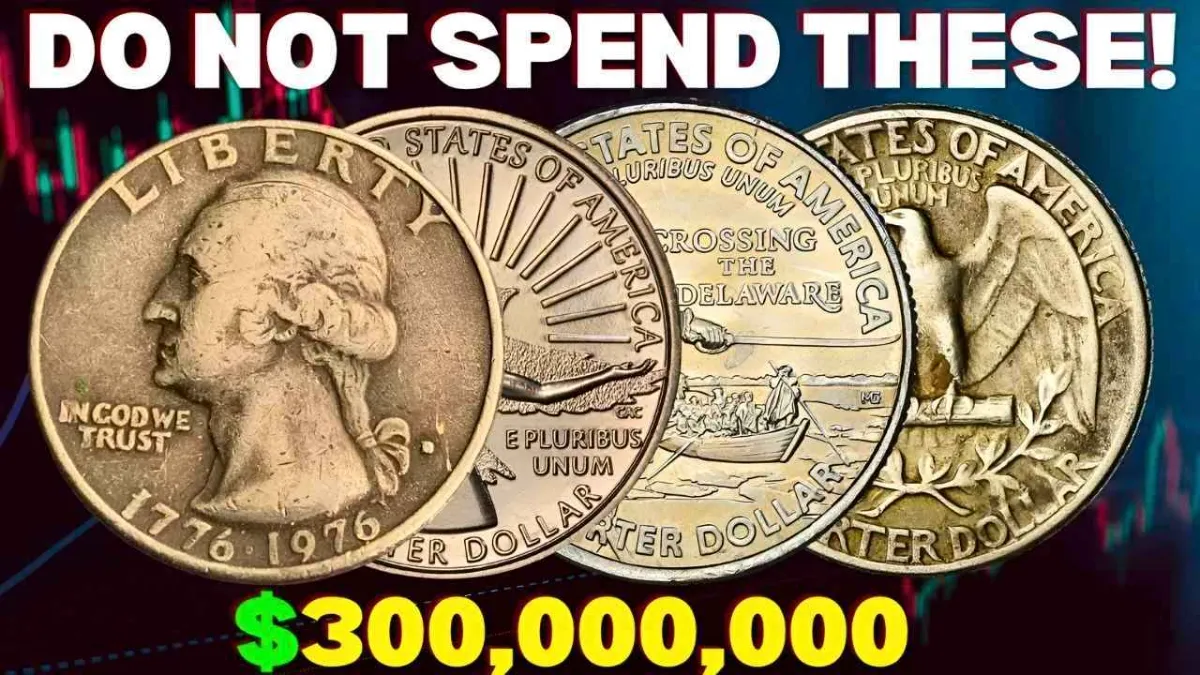
Bicentennial Quarters Coin collecting is more than just a hobby — it’s a treasure hunt through history. Across the United States, a few rare dimes and special Bicentennial quarters have reached astonishing values at auctions. While headlines sometimes claim a combined value of $495 million, the real worth depends on rarity, condition, and collector demand.
If you’ve ever wondered whether a small coin in your drawer could be worth thousands — or even millions — this detailed, copyright-free collector’s guide will help you understand what to look for.
1. 1894-S Barber Dime – The Legendary Rarity
The 1894-S Barber Dime is one of the rarest coins ever produced in U.S. history. Only 24 pieces were minted at the San Francisco Mint, and fewer than 10 are believed to exist today.
Why It’s Valuable:
The extremely low mintage makes it a “holy grail” coin. Wealthy collectors compete fiercely whenever one appears at auction.
Estimated Value:
Depending on condition, this dime has sold for over $1.5 million to $2 million.
How to Identify It:
-
Year: 1894
-
Mint Mark: Small “S” on the reverse
-
Design: Liberty head (Barber design)

If you ever encounter one, professional authentication is absolutely necessary.
2. 1916-D Mercury Dime – A Collector Favorite
The 1916-D Mercury Dime is another highly desirable coin. It was minted in Denver, with only 264,000 coins produced, making it the lowest mintage of the Mercury series.
Why It’s Valuable:
Low production numbers and strong collector demand.
Estimated Value:
In average circulated condition, it can be worth several thousand dollars. In high mint state grades, it may exceed $50,000 or more.
Identification Tip:
Look for the small “D” mint mark on the reverse near the bottom.
3. 1975 No-S Roosevelt Dime – Rare Mint Error
Most proof dimes produced in San Francisco carry an “S” mint mark. However, a few 1975 proof dimes were mistakenly struck without the “S” mint mark.
Why It’s Valuable:
Extremely rare mint error — only a few confirmed examples exist.
Estimated Value:
Auction sales have exceeded $400,000–$500,000 depending on grade.

How to Check:
-
Proof coin with mirror-like finish
-
No “S” mint mark above the date
This coin would not typically appear in circulation; it was part of proof sets.
4. 1976 Bicentennial Quarter – Rare Error Versions
The Bicentennial Quarter was released to celebrate America’s 200th anniversary. Billions were made, so standard versions are common. However, certain error varieties can be highly valuable.
Valuable Errors Include:
-
Doubled die varieties (noticeable doubling in letters or numbers)
-
Off-center strikes

-
Struck on the wrong planchet
Estimated Value:
Depending on the error and condition, these can range from $1,000 to $10,000+.
Identification Tip:
The reverse design features a colonial drummer and the dual date “1776–1976.”
5. 1976-S Silver Bicentennial Quarter – High-Grade Treasure
Unlike regular quarters, the 1976-S silver version was struck in 40% silver and sold in special collector sets.
Why It’s Valuable:
Silver content and high-grade examples graded MS69 or PR70 are rare.
Estimated Value:
Standard silver versions may be worth $10–$20 in average condition. However, top-graded examples have sold for thousands of dollars.
How to Identify:
-
“S” mint mark

-
Silver weight slightly higher than clad versions
-
Often found in original government packaging
Quick Value Summary Table
| Coin Name | Key Feature | Estimated Top Value |
|---|---|---|
| 1894-S Barber Dime | Only 24 minted | $2,000,000+ |
| 1916-D Mercury Dime | Low mintage | $50,000+ |
| 1975 No-S Dime | Missing mint mark | $500,000+ |
| 1976 Error Quarter | Doubled/planchet errors | $10,000+ |
| 1976-S Silver Quarter | 40% silver high grade | Thousands |
How to Check If Your Coin Is Valuable
Before assuming you’ve struck gold, follow these steps:
-
Examine the mint mark carefully.
-
Use a magnifying glass to inspect for doubling or errors.
-
Weigh the coin if checking for silver content.
-
Compare with trusted coin value guides.
-
Seek professional grading services for authentication.

Condition plays a huge role. A coin in poor shape may be worth far less than the same coin in mint state condition.
Q1: Are Bicentennial quarters worth $495 million?
No single Bicentennial quarter is worth that amount. The figure usually represents exaggerated combined estimates or speculative hype.
Q2: Can I find these coins in circulation today?
While it’s possible, most high-value examples are already in private collections.
Q3: How do I sell a rare coin?
You can approach reputable coin dealers, auction houses, or certified grading companies.
Q4: Should I clean an old coin before selling?
No. Cleaning a coin can significantly reduce its value.
Final Thoughts
Rare dimes and Bicentennial quarters continue to fascinate collectors because they combine history, artistry, and scarcity. While the chance of discovering a million-dollar coin in everyday change is slim, it’s not impossible. The key is knowledge — understanding mint marks, mintage numbers, condition grades, and error types.